New Request Alert


Overview
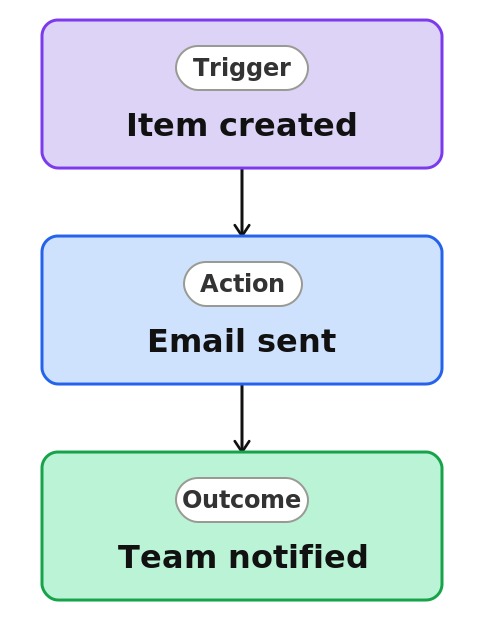
- Emails the right people as soon as a new item is added to a list
- Built as a Rule, a no-code automation created right on the list
- Set up by completing a plain-language sentence, not a workflow designer
- Notifies a named person or whoever is in a column on the item
- Fires automatically, so nobody has to watch the list
- Lives with the list, with nothing separate to build or maintain
Common Use Cases
- Alerting an intake coordinator when a new request is submitted
- Notifying support when a new ticket is logged
- Telling a manager when a new idea is added to a backlog
- Letting a team know when a new order or lead arrives
- Flagging a compliance owner when a new record is created
- Keeping a project lead posted on new task submissions
Common Questions About New Request Alert
If LookBook 365 is code-free and out-of-the-box, why does it include this workflow example?
A Rule is a native SharePoint automation you build by completing a plain-language sentence right on the list – no code and no Power Automate. It watches for the change you specify and sends the email itself, inside your Microsoft 365 tenant, with nothing to develop or maintain.
What triggers this alert?
The rule fires whenever a new item is created in the list. If you only want alerts for certain items, you can add a condition so it fires only when a column has a specific value.
Who gets the email?
A person you name, or the person stored in a column on the item, such as Created By. Notifications go to people inside your organization.
Can I have more than one alert on a list?
Yes, up to 15 rules per list. Rules only send email, though – for updating items or multi-step logic you move to Power Automate.
Where do the emails come from?
From no-reply@sharepointonline.com, which is worth telling recipients so the messages are not filtered.
Can you set this up and train my team?
Absolutely. I design the list or library, set up the automation, and show your team how to manage it. When your process grows beyond this, I can extend it into a full Power Automate flow that fits how you actually work.